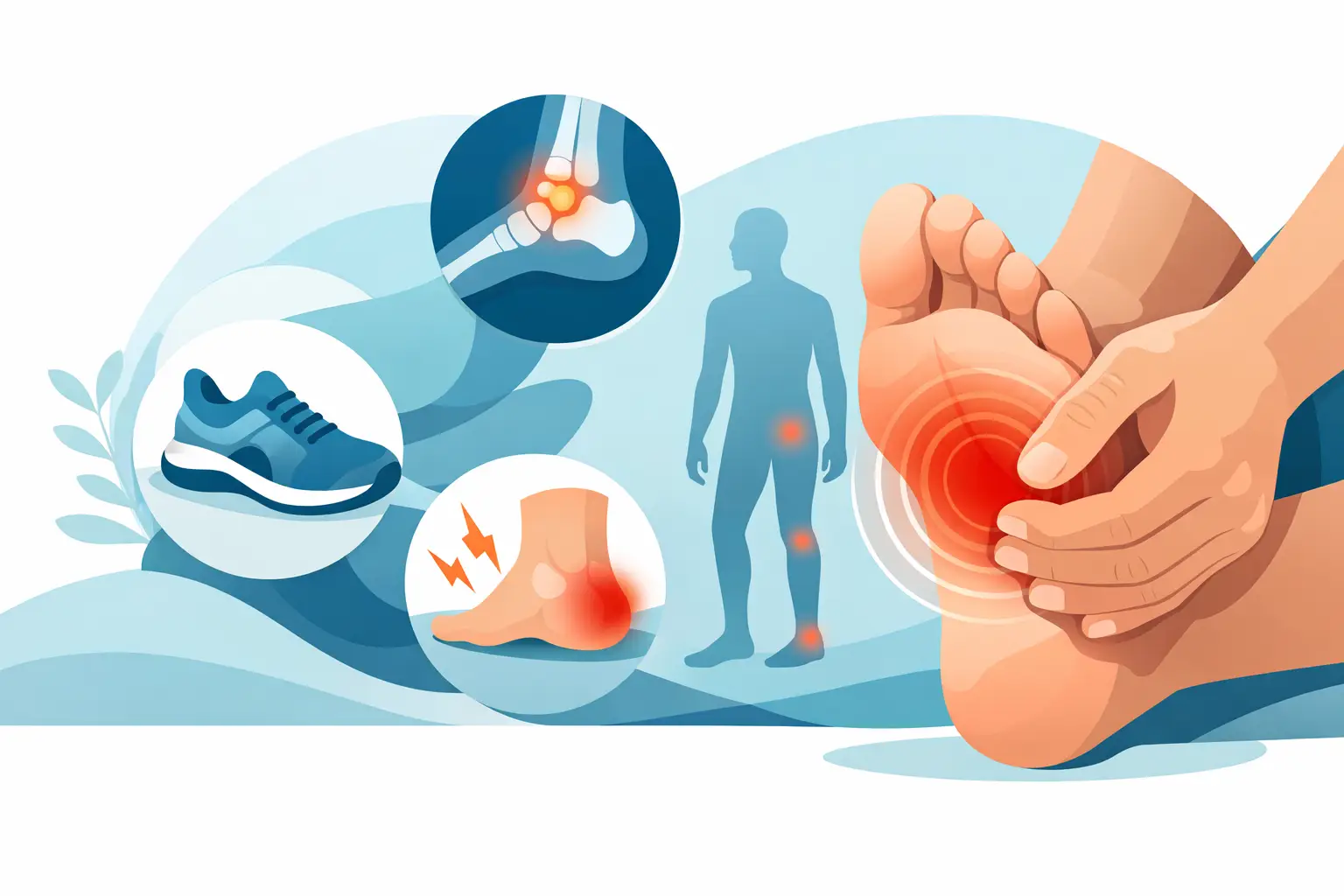
A Guide to Foot Pain Causes
Foot pain rarely starts as a big problem. More often, it begins as that sore first step out of bed, a burning patch under the ball of the foot, or an ache that shows up after a long shift. A clear guide to foot pain causes can help you work out whether the issue is likely to settle with simple care or whether it needs proper assessment before it starts affecting how you walk, work, or stay active.
Why foot pain happens in the first place
Your feet absorb force all day. They support body weight, adapt to uneven ground, and help move you forward with every step. Because of that workload, pain can come from muscles, tendons, ligaments, joints, nerves, skin, or bone.
That is why foot pain is not one single condition. The location of the pain, what brings it on, and how long it has been there all matter. Heel pain after rest suggests something different from pain across the top of the foot after sport, and both differ again from numbness or tingling in the toes.
In many cases, the cause is mechanical. The foot may be under extra stress because of footwear, activity levels, gait changes, tight calves, or the way the foot rolls during walking. Sometimes the issue is linked to injury, arthritis, diabetes, or skin and nail problems rather than strain alone.
A guide to foot pain causes by area
Looking at where the pain sits is often the quickest way to narrow things down.
Heel pain
Heel pain is one of the most common reasons people book a podiatry appointment. For many adults, the main culprit is plantar fasciopathy, often still called plantar fasciitis. This tends to cause pain under the heel, especially with the first few steps in the morning or after sitting.
The tissue under the foot becomes irritated from repeated load rather than one dramatic incident. Long hours standing, unsupportive footwear, a sudden increase in exercise, and tight calves can all contribute. It can feel sharp early on, then ease as you move, only to return later in the day.
Heel pain can also come from Achilles tendon problems, heel bursitis, fat pad irritation, or less commonly a stress injury. If the pain is more at the back of the heel than underneath it, the cause may be quite different.
Ball of foot pain
Pain under the forefoot often points to overload. Metatarsalgia is the general term for pain around the ball of the foot and can feel like bruising, burning, or the sense that you are walking on a pebble.
Sometimes this is linked to footwear that shifts pressure forward, especially narrow shoes or high heels. In other cases, it is related to foot structure, toe deformities, reduced cushioning, or high-impact activity. A neuroma, which involves nerve irritation between the toes, can also cause burning pain or tingling that spreads into the forefoot.
Arch pain
Pain through the arch may be related to plantar fascia strain, muscle fatigue, or overuse. Flat feet do not always cause symptoms, but for some people, changes in foot posture can increase strain through the arch and ankle.
On the other hand, very high arches can create a different set of problems by concentrating pressure in specific areas. This is why foot type matters, but not in a simplistic way. The issue is usually how the foot functions under load, not whether it looks flat or high in a static photo.
Toe pain
Toe pain has a wide range of causes. Ingrown toenails can make even normal shoes feel unbearable. Corns and calluses can create pressure pain, while bunions may lead to joint soreness and irritation from footwear.
Pain in the big toe joint is sometimes linked to arthritis or restricted joint motion. In children and active adults, toe pain after sport may relate to jamming injuries, tendon strain, or overloading the forefoot during push-off.
Pain on the top of the foot
Pain across the top of the foot can be easy to ignore at first, but it should not be brushed off if it persists. Tight footwear can irritate tendons and nerves in this area. Extensor tendon irritation is one possibility, especially in walkers and runners.
That said, top-of-foot pain can also signal a stress reaction or stress fracture, particularly if there has been a jump in training load or the pain becomes more localised and sharp. Swelling and pain with activity are clues worth taking seriously.
Common underlying causes beyond location
A useful guide to foot pain causes also needs to look beyond anatomy. Two people can have pain in the same area for very different reasons.
Overuse and training changes
A sudden change in load is a common trigger. That could mean starting a new exercise program, increasing running distance, returning to sport too quickly, or spending more hours on your feet at work. Even positive changes can overload tissues that have not had time to adapt.
Footwear issues
Shoes matter more than many people realise. Footwear that is too flat, too worn, too narrow, or not suited to the activity can change how force moves through the foot. There is no single perfect shoe for everyone, but comfort, support, fit, and purpose all count.
Biomechanical factors
How you walk and move can influence which parts of the foot are repeatedly stressed. Limited ankle mobility, calf tightness, muscle weakness, and altered gait patterns can all contribute. This is one reason assessment can be so helpful when pain keeps coming back.
Arthritis and joint changes
Not all foot pain is soft tissue strain. Osteoarthritis and inflammatory joint conditions can cause stiffness, swelling, and pain, particularly in the toes and midfoot. Symptoms may be more noticeable after rest or at the end of the day, depending on the condition.
Nerve irritation
Burning, tingling, numbness, or shooting pain may point to nerve involvement. A neuroma is one example, but nerve symptoms can also relate to back issues, diabetes, or local compression from footwear.
Skin and nail conditions
Corns, calluses, cracked heels, warts, and ingrown nails can all be painful enough to alter the way you walk. While these may seem minor compared with tendon or joint pain, they can still affect mobility and should not be overlooked.
When foot pain needs prompt attention
Some foot pain can be monitored for a short time, especially if it is mild and clearly linked to a recent change in activity. But certain signs should prompt earlier assessment.
Pain that is severe, worsening, or stopping you from weight-bearing needs attention. The same applies if there is significant swelling, redness, heat, pins and needles, or pain after an injury. If you have diabetes, poor circulation, or reduced sensation, even a small foot problem deserves timely care because the risk profile is different.
Foot pain that lasts more than a couple of weeks is also worth checking, even if it comes and goes. Persistent pain often means the original cause has not been addressed.
What assessment can reveal
A proper podiatry assessment is not just about naming the sore spot. It helps identify why the tissue is under strain and what factors are keeping it there.
That may include looking at your footwear, foot posture, gait, joint movement, calf flexibility, pressure points, and activity history. In some cases, treatment is simple and focused on load management, footwear changes, strapping, or targeted exercises. In others, more involved care may be needed, such as orthotic support, dry needling, shockwave therapy, skin and nail treatment, or referral for imaging when a fracture or more complex condition is suspected.
The right plan depends on the cause. Rest alone helps some conditions, but for others, complete rest can delay recovery or fail to address the reason the pain developed.
The value of early treatment
Many patients wait until foot pain starts affecting work, sleep, or everyday mobility before doing anything about it. By then, people may already be limping or shifting weight in ways that create new aches in the ankle, knee, or hip.
Early treatment is often more straightforward. Small issues are easier to manage before they become stubborn. For families, that matters with children too. If a child regularly complains of heel pain, trips more than expected, or avoids activity, it is worth having it assessed rather than assuming they will grow out of it.
For adults, especially those balancing work, sport, and family life, practical treatment matters. The goal is not simply to explain the pain. It is to reduce it, improve movement, and help you stay active with less interruption.
At Ian’s Podiatry, that local, whole-foot approach is what often makes the difference. A sore heel, a painful forefoot, or an ingrown nail may seem like separate problems, but all of them can change how comfortably you move through the day.
If your foot pain keeps returning, starts changing the way you walk, or simply does not make sense, getting clear answers early can save you a lot of frustration later. The sooner you understand the cause, the sooner you can get back to moving with confidence.