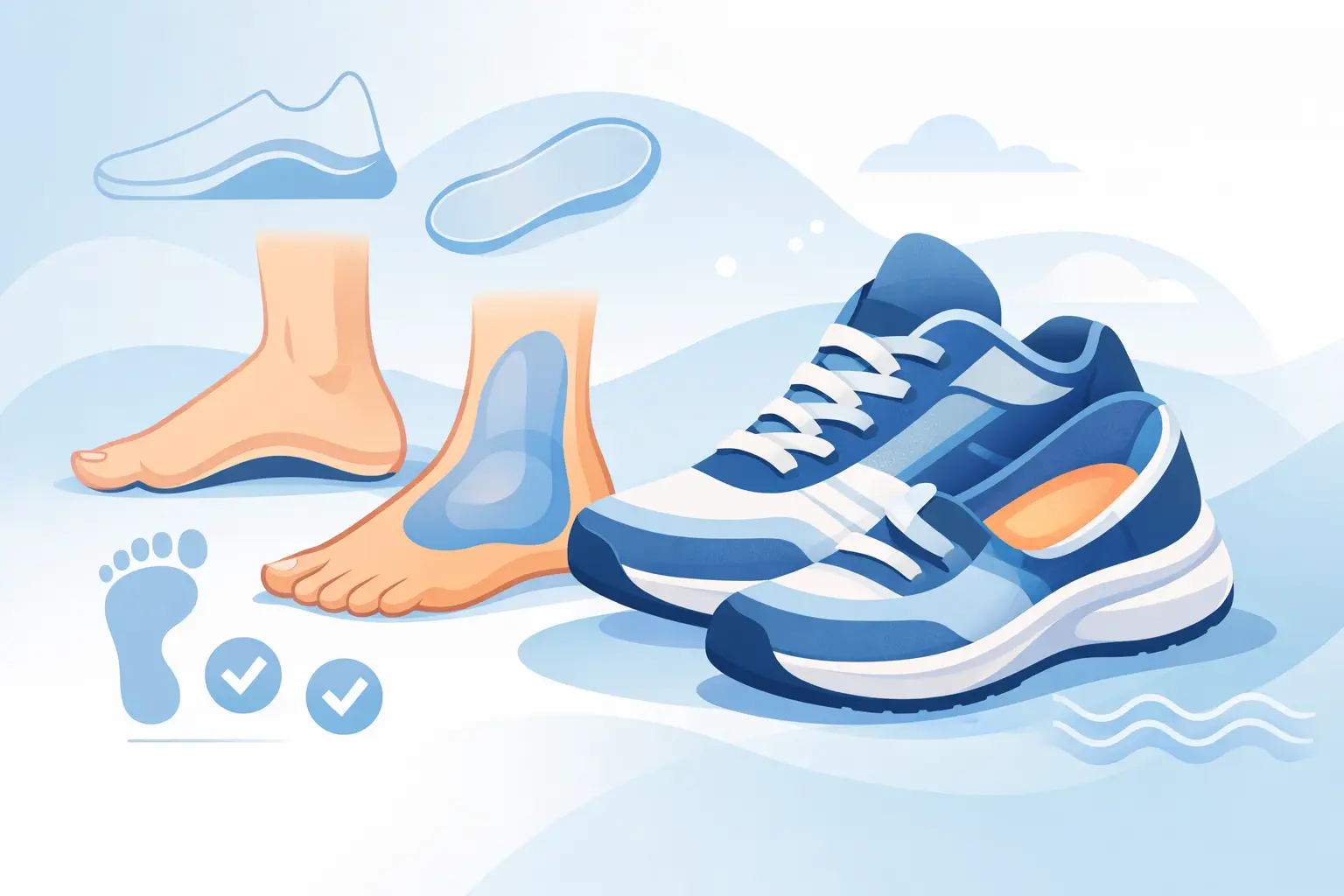
Best Shoes for Flat Feet: What to Look For
If your feet ache after a walk through Stockland, a work shift on hard floors, or a round of weekend sport, your shoes may be working against you. For many people, finding the best shoes for flat feet is less about chasing a popular brand and more about choosing the right support for the way your feet actually move.
Flat feet are common, and they do not always cause pain. Some people have low arches and function perfectly well. Others develop heel pain, arch fatigue, ankle strain, shin soreness or even knee and hip discomfort because the foot is rolling in more than it should. That is where footwear matters. The right shoe can help improve comfort, reduce pressure on overworked tissues and make daily activity easier.
What flat feet really mean
A flat foot usually has a lower arch, either all the time or when weight is placed on it. In many cases, the foot also rolls inward more than average during walking. This is often called overpronation. That movement is not automatically a problem, but if it is excessive or poorly controlled, it can place extra load on the plantar fascia, tibialis posterior tendon, ankles and lower limbs.
Not every flat foot needs the same type of shoe. A child with flexible flat feet, an adult runner with recurring shin pain, and an older person with arthritis will not all need the same features. That is why broad advice like buy the most supportive shoe on the shelf can miss the mark.
Best shoes for flat feet start with stability
For most adults with symptomatic flat feet, the main goal is not to force a high arch. It is to provide a more stable base. A good shoe helps guide the foot through each step without letting it collapse too far inward.
That usually means looking for a firmer midsole, a secure heel counter and a shape that feels stable underfoot. When you twist the shoe in your hands, it should not fold like a tea towel. It should have some structure through the middle. When you press around the heel, it should feel firm rather than floppy.
A stable shoe can reduce fatigue, especially if you spend long hours standing or walking. It can also improve the way orthotics or inserts work, because even the best device struggles inside an unsupportive shoe.
Features that usually help
A few design elements tend to work well for flat feet. A firm heel counter helps control rearfoot motion. A midsole with moderate density can limit excessive rolling without feeling overly hard. A shoe with torsional stability through the midfoot often feels more secure than one that bends and twists too easily.
Depth matters too. If you wear orthotics, or think you may need them, a deeper shoe with a removable insole gives you more room to work with. Laces or adjustable fastenings are also better than slip-on styles if you want a more customised fit.
Features that can cause problems
Very soft, marshmallow-like shoes can feel pleasant in the shop but may allow the foot to sink and roll too much over time. Minimalist shoes, highly flexible runners and unsupportive fashion sneakers may also aggravate symptoms in people who already have heel pain or tendon strain.
That does not mean soft shoes are always bad. If you have a stiff, arthritic foot or pressure points, some cushioning can be useful. It depends on whether your main problem is poor control, poor shock absorption, or both.
How to choose the best shoes for flat feet for your activity
The best shoe for walking is not always the best shoe for work, school or sport. Matching the shoe to the job makes a real difference.
For walking, most people do well in a stable walking shoe or supportive running shoe with a firm base and good heel control. You want enough cushioning for comfort, but not so much softness that the foot feels unstable.
For work, especially in retail, healthcare, trades or hospitality, comfort over many hours matters more than flashy design. A supportive shoe with a wide, steady platform and secure upper can reduce fatigue by the end of the day. If safety requirements apply, the fit still needs to be right. A heavy boot that rubs, compresses the toes or shifts at the heel can create a different set of problems.
For running, the picture is more nuanced. Some runners with flat feet need a structured stability shoe. Others are comfortable in a neutral shoe if their strength and mechanics are good. If you keep getting injuries, choosing footwear based on gait and symptom history rather than marketing labels is the smarter approach.
For school shoes, children need something durable, secure and appropriate for their activity level. A firm heel, reasonable flexibility at the forefoot and a snug fit are usually more helpful than a very soft shoe that bends in half.
Fit matters as much as support
Even well-designed shoes can fail if they do not fit properly. A shoe that is too narrow may push the foot over the edge of the sole, reducing stability. A shoe that is too long or too loose can make you grip with your toes and alter your walking pattern.
The heel should feel secure without rubbing. The widest part of the foot should sit in the widest part of the shoe. You should have enough room at the front for your toes to move, but not so much that your foot slides around. If one foot is larger, fit the bigger foot.
It is also worth trying shoes on later in the day, when feet are a bit more swollen. That tends to give a more realistic fit, especially in Townsville’s warmer conditions.
When shoes alone are not enough
Sometimes people buy multiple pairs looking for relief, when the real issue is that footwear is only one part of the solution. If you have ongoing heel pain, repeated ankle rolling, tendon soreness, forefoot pain or wear patterns that are clearly uneven, an assessment can help identify what is really driving the problem.
Custom orthotics are not necessary for everyone with flat feet, but they can be useful when a good shoe alone does not provide enough support. They may help manage plantar fasciitis, posterior tibial tendon dysfunction, fatigue from prolonged standing, or recurrent overload injuries. Prefabricated inserts can also be effective in some cases, particularly for mild to moderate support needs.
Footwear advice should also consider strength, flexibility and general movement patterns. Tight calves, weak foot muscles, poor hip control and old injuries can all influence how a flat foot behaves. That is why a shoe that helps one person can feel completely wrong for another.
Common mistakes people make
One of the biggest mistakes is assuming flat feet automatically need the hardest, most rigid shoe available. Too much correction can be uncomfortable, particularly if your feet are flexible and pain-free most of the time. Another common problem is choosing shoes based only on cushioning. Cushioning can improve comfort, but if the foot is unstable, soft foam alone may not solve the issue.
People also tend to hang onto worn shoes for too long. Once the midsole has broken down or the upper no longer holds the foot well, the support you relied on is gone. If your symptoms have gradually returned, the shoe itself may be part of the reason.
When to get your flat feet assessed
If your flat feet are causing pain, affecting your walking, limiting sport or making work more difficult, it is worth getting them checked. The same applies if your child’s feet seem very flat and they are tripping often, tiring quickly or complaining of leg pain.
A podiatry assessment can look at how your feet move, where the load is going, what type of shoe is likely to suit you and whether you may benefit from exercises, footwear changes or orthotic support. At Ian’s Podiatry, this approach is based on practical outcomes – less pain, better movement and footwear that fits your life rather than just the shelf label.
The best shoes for flat feet are the ones that support your foot type, suit your daily activity and feel comfortable enough to wear consistently. If a pair of shoes helps you get through the day with less pain and more confidence on your feet, that is usually a good sign you are on the right track. And if you are still unsure, a proper assessment can save you from spending money on shoes that were never going to help in the first place.