How to Treat Heel Bursitis Properly
A sore heel can change the way you walk before you even realise it. If you are wondering how to treat heel bursitis, the first step is understanding that this type of heel pain often responds best to early care, pressure reduction, and the right treatment plan rather than simply trying to push through it.
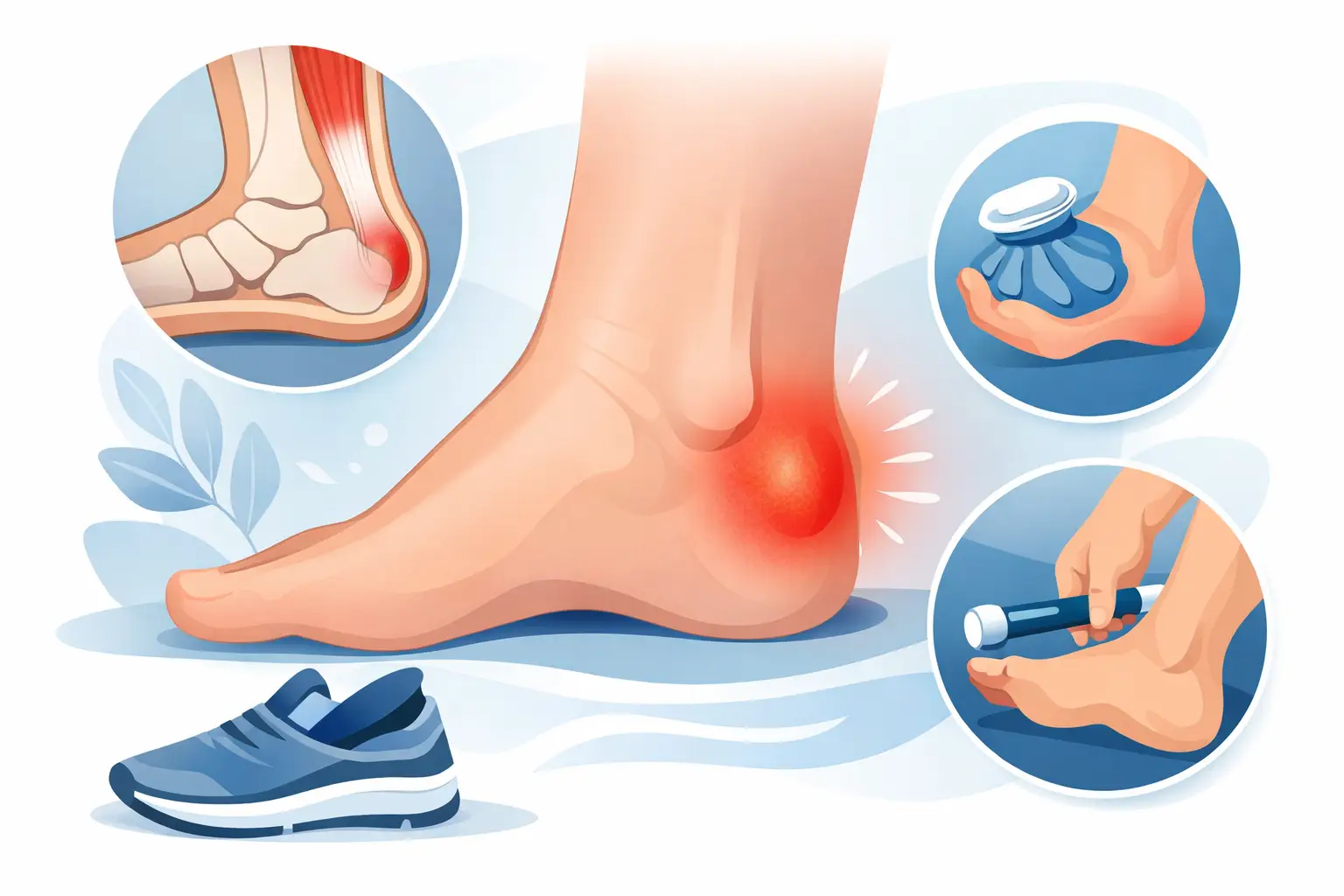
Heel bursitis happens when a bursa becomes irritated and inflamed. A bursa is a small fluid-filled sac that helps reduce friction between tissues. Around the heel, bursitis usually develops either at the back of the heel near the Achilles tendon or underneath the heel where pressure builds during standing and walking. In both cases, the area can become painful, swollen, and sensitive, especially when shoes rub or when your activity levels increase.
For many people, heel bursitis starts gradually. It might feel like a deep ache at first, then turn into sharper pain after exercise, long shifts on your feet, or time in unsupportive shoes. Some people also notice warmth, puffiness, or tenderness when pressing on the heel.
What causes heel bursitis?
The most common cause is repeated pressure or friction. That can come from footwear that rubs the back of the heel, a sudden increase in walking or running, tight calf muscles, or foot mechanics that place extra strain on the heel. In some cases, bursitis develops alongside Achilles tendon irritation, heel spurs, or other sources of heel pain.
That is why getting the diagnosis right matters. Heel bursitis can feel similar to plantar fasciitis, insertional Achilles tendinopathy, or irritation from a bony prominence at the heel. The treatment may overlap, but it is not always identical.
How to treat heel bursitis at home
If symptoms are mild and fairly recent, early self-care can settle the irritation before it becomes a longer-term issue.
Reduce the pressure on the heel
The inflamed bursa needs less rubbing and less compression. That often means changing footwear straight away. Shoes with a stiff or high heel counter can aggravate the back of the heel, while flat unsupportive shoes can increase strain through the heel and lower limb. A well-cushioned shoe with a comfortable heel area usually helps. If the back of the shoe is the problem, temporarily choosing footwear that avoids direct rubbing can make a real difference.
Modify activity for a short period
This does not always mean complete rest, but it does mean pulling back on the movements that keep stirring it up. Running hills, sprint work, long walks, jumping exercise, and standing for extended periods can all make heel bursitis worse. A short period of reduced load gives the inflamed tissue a chance to settle.
The key is not to stop everything for weeks and then return to full activity at once. That tends to restart the cycle. A gradual return works better.
Use ice for symptom relief
Cold therapy can help calm pain and swelling, particularly after activity. Apply an ice pack wrapped in a cloth for 10 to 15 minutes at a time. It should feel cold but not harsh. Ice will not fix the underlying cause by itself, but it can be useful in the early stage.
Avoid aggressive stretching if it flares the area
People often start stretching the calf as soon as heel pain appears. Sometimes that helps, but with bursitis at the back of the heel, forcing the ankle into deep stretch can compress the sore area and make it worse. If stretching increases pain, it is better to stop and have the heel assessed before continuing.
When home care is not enough
If pain is lingering, recurring, or affecting the way you walk, treatment should focus on the cause as well as the inflammation. This is where a podiatry assessment becomes valuable.
A proper assessment looks at where the pain sits, what movements aggravate it, what footwear you are using, how your foot and ankle are functioning, and whether there is another condition involved. Heel bursitis is often part of a broader mechanical issue rather than a random flare-up.
Podiatry treatment for heel bursitis
When patients ask how to treat heel bursitis effectively, the answer usually involves a combination of symptom relief and load management. The right plan depends on whether the bursa is irritated by footwear, overuse, calf tightness, foot posture, or an associated tendon problem.
Footwear advice and pressure offloading
Simple changes in footwear can be one of the most effective parts of treatment. If the shoe is rubbing the back of the heel, there is little point treating inflammation without removing that trigger. In some cases, heel lifts or temporary padding may reduce strain and improve comfort while the area settles.
Biomechanical assessment
The way you walk and load your feet matters. If you are rolling in too much, have limited ankle motion, or are placing extra pressure through the heel during gait, those patterns can keep the area irritated. A biomechanical assessment helps identify whether your foot function is contributing to the problem.
Orthotic support when needed
Not everyone with heel bursitis needs orthotics, but some do benefit from them. If the heel pain is linked to poor load distribution, unstable foot mechanics, or ongoing strain through the heel and Achilles area, orthotic support may help reduce repeated aggravation. The goal is practical: improve movement, reduce stress on the painful area, and make everyday walking more comfortable.
Hands-on treatment and guided rehab
Treatment may also include hands-on care to address surrounding tightness and improve lower-limb function. If the calf complex and Achilles are involved, a guided strengthening or mobility plan may be introduced carefully, at the right time. The timing matters. Too much too soon can flare the heel, while doing too little can leave the underlying issue unchanged.
Advanced non-invasive therapies
For more stubborn heel pain, non-invasive treatment options may be considered as part of a broader plan. Where appropriate, therapies such as shockwave treatment may be used in cases where surrounding structures are also involved. This depends on the exact diagnosis and how long symptoms have been present.
What makes heel bursitis linger?
The biggest reason heel bursitis drags on is ongoing irritation. That might be a shoe that keeps rubbing, a sport or job that does not allow enough recovery, or a gait pattern that places repeated stress on the same area. Some people also continue treating it like plantar fasciitis and focus only on stretching or massage, which may not help if compression is the real issue.
Another common problem is returning to normal too quickly once the pain starts easing. A heel can feel better before the tissue has fully settled. If you go straight back to full training or long days on your feet, symptoms can return quickly.
When to seek help sooner
It is worth booking an assessment if the pain has lasted more than a week or two without clear improvement, if there is visible swelling at the back of the heel, if shoes have become hard to wear, or if you are limping. People with diabetes should also have heel pain assessed promptly, especially if there is redness, skin irritation, or any concern about pressure areas.
Children and teenagers with heel pain should not simply be treated as small adults either. While bursitis is not the only possible cause, persistent heel pain in younger patients needs a proper assessment to rule out other conditions linked to growth and activity.
How long does recovery take?
It depends on how irritated the bursa is and what is driving it. Mild cases caught early may improve within a couple of weeks with good footwear changes and reduced aggravation. More persistent cases can take longer, especially if there is an associated tendon issue or the heel has been painful for months.
The good news is that most people improve well when the pressure is reduced and the cause is properly addressed. Treatment works best when it is not just chasing pain relief, but also correcting what keeps loading the heel in the first place.
Preventing it from coming back
Prevention usually comes down to a few practical habits: wear shoes that do not rub, build up activity levels gradually, replace worn footwear before it starts changing your gait, and deal with tightness or movement issues before they become pain. If you have had recurring heel pain before, it is often worth checking whether your footwear, training load, or foot mechanics need attention.
For patients around Townsville who spend long hours on their feet, play sport regularly, or notice that heel pain keeps returning, early treatment is often the simplest path. At Ian’s Podiatry, that means looking beyond the sore spot itself and working out what will actually help you move comfortably again.
Heel bursitis rarely improves from being ignored. A few smart changes early on can settle it quickly, and if it is not settling, getting the right assessment can save you weeks or months of walking around sore.