How to Make Your Heel Stop Hurting
That first step out of bed can tell you a lot. If your heel feels sharp, tight or bruised when your foot hits the floor, you are probably wondering how to make your heel stop hurting – and how to get through work, exercise or even a simple walk without wincing.
Heel pain is common, but it is not all the same. Some people feel it under the heel, especially first thing in the morning. Others notice pain at the back of the heel, around the Achilles tendon, or after long hours standing on hard floors. The reason the pain started matters, because the right treatment depends on what is actually being irritated.
How to make your heel stop hurting starts with the cause
A sore heel is a symptom, not a diagnosis. One of the most common causes is plantar fasciitis, where the thick band of tissue under the foot becomes overloaded. This often causes pain under the heel that is worse with the first few steps after rest, then eases a little as you move.
Another common cause is Achilles tendinopathy, which affects the tendon at the back of the heel. This can feel stiff in the morning and sore during walking, running or going up hills. Heel bursitis, fat pad irritation, Sever’s disease in active children, and stress-related bone pain can also be involved. Sometimes footwear is the main issue. Sometimes a change in training, work demands, weight-bearing or foot mechanics is what tips things over.
That is why generic advice does not always work. Ice might help one person and do very little for another. Stretching can be useful in some cases, but if the tissue is already irritated by overload, aggressive stretching may make it worse.
What you can do at home for heel pain
If your heel pain is mild or fairly new, a few simple changes can settle it down. The first is reducing whatever is provoking it. That does not always mean complete rest. It usually means cutting back on the activity that flares it, whether that is long walks, running, sport, or hours in unsupportive shoes.
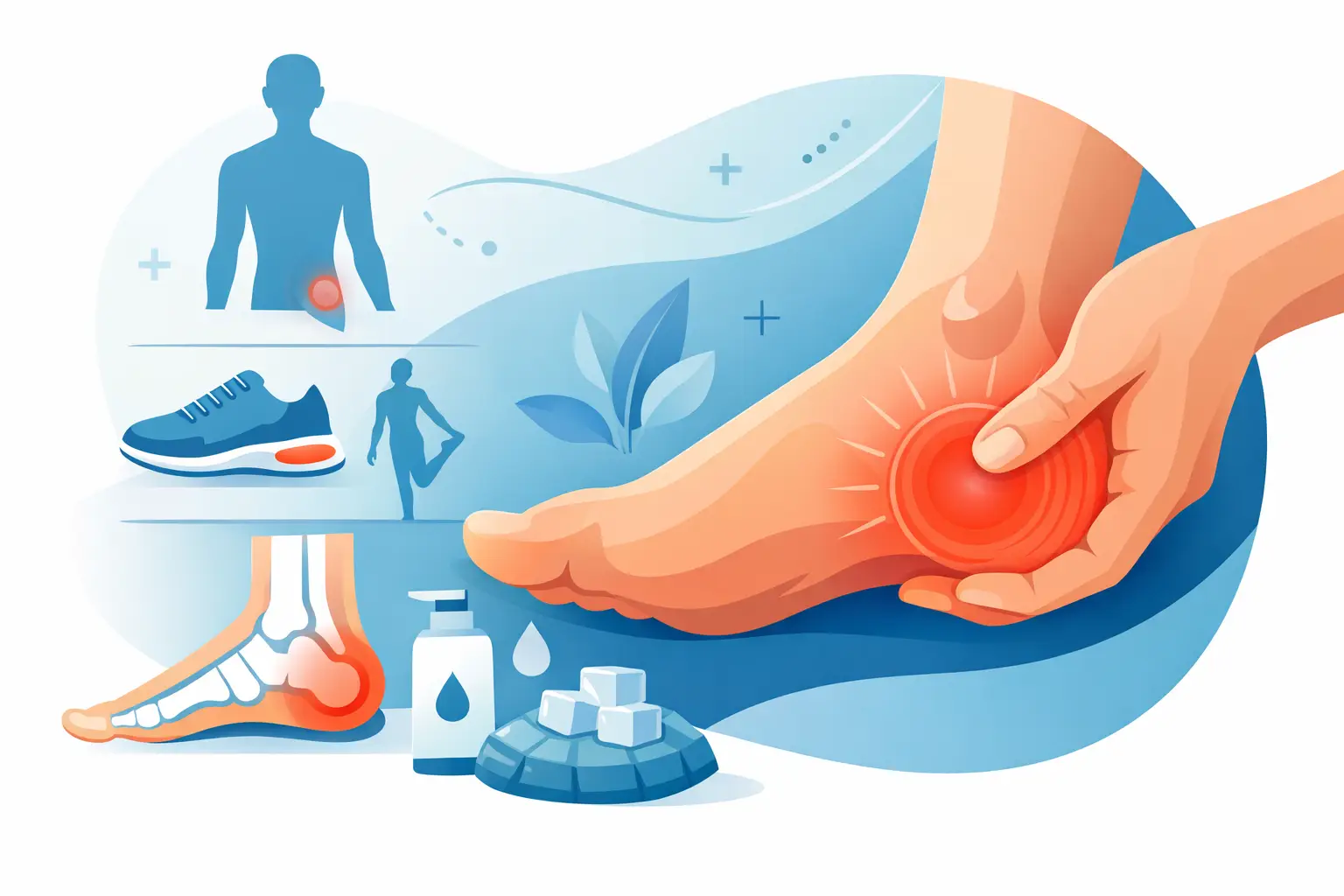
Footwear matters more than many people realise. Flat, thin or worn-out shoes can keep an irritated heel under constant strain. A more supportive shoe with cushioning through the heel can reduce the load. Around the house, avoid going barefoot if that makes the pain worse. Many people with plantar heel pain feel better with supportive footwear on hard indoor floors.
Cold packs can help calm a flare-up, especially after a busy day. Apply one for short periods with a cloth between the ice and your skin. This can ease soreness, but it will not fix the reason the heel became painful in the first place.
Gentle calf and foot stretches may help if tightness is contributing, but they need to be done sensibly. Sharp pain is a sign to stop. Strengthening is often just as important as stretching, particularly for Achilles-related pain. Heel raises, prescribed at the right level, can improve tendon capacity over time. The catch is that the right exercise depends on the diagnosis, and doing the wrong one can delay recovery.
Why heel pain often keeps coming back
The frustrating part of heel pain is that it can settle, then return as soon as life gets busy again. That usually happens because the tissue calmed down, but the load on it did not really change.
For example, someone may rest for a week, feel a bit better, then go straight back to the same exercise routine, same shoes and same long shifts standing. Or they may treat only the painful spot, when the real issue involves calf tightness, foot posture, joint stiffness or lower-limb biomechanics.
This is where assessment matters. Looking at where the pain is, when it happens, what shoes you wear, how you walk and what demands your day puts on your feet gives a much clearer picture than simply calling it heel pain.
When self-care is not enough
If heel pain has lasted more than a couple of weeks, keeps returning, or is making you limp, it is worth having it properly assessed. The same applies if the pain is severe, came on after a sudden increase in activity, or is affecting a child who is growing quickly and playing sport.
A podiatry assessment can help identify whether the problem is plantar fasciitis, Achilles tendinopathy, heel bursitis, a growth-related issue or something less common. That matters because treatment is usually most effective when it is matched to the tissue involved and the way it is being overloaded.
At Ian’s Podiatry, treatment plans are tailored to the person, not just the condition name. For one patient, that may mean footwear advice and a targeted exercise plan. For another, it may involve orthotics, shockwave therapy, dry needling or hands-on treatment to reduce strain and improve function.
Treatments that may help make your heel stop hurting
There is no single fix for every sore heel, but there are several effective options. Load management is usually the starting point. That means adjusting activity to calm the pain while keeping you moving as much as possible.
Supportive footwear and, in some cases, orthotics can reduce pressure on irritated structures and improve the way forces move through the foot. This is especially useful when foot posture or mechanics are adding to the problem. Orthotics are not needed for everyone, but for the right patient they can make everyday walking much more comfortable.
Exercise therapy is a key part of treatment. The goal is not only to ease pain now, but to help the tissue handle normal daily demands again. That may involve calf strengthening, foot strengthening, mobility work or gradual return-to-activity planning.
Shockwave therapy can be helpful for some persistent cases, particularly when heel pain has been lingering and not responding well to basic treatment. Dry needling may also be used where muscle tightness through the calf or lower leg is contributing to the load on the heel. These options are not magic cures, but they can be useful as part of a broader treatment plan.
How to make your heel stop hurting if you are on your feet all day
For many people in Townsville, the problem is not sport. It is work. Teachers, retail staff, tradies, nurses and hospitality workers often spend long hours on hard surfaces, and the heel takes that load repeatedly.
If that sounds familiar, recovery usually depends on practical changes. Better work shoes, a gradual build-up after time off, rest breaks where possible, and treatment that improves the foot’s ability to cope with sustained standing all tend to matter. Waiting until the pain is severe usually means a longer recovery.
The same applies to active people who push through heel pain because they do not want to lose fitness. A short-term adjustment often leads to a quicker return than trying to train through worsening symptoms.
Signs your heel pain needs prompt attention
Some heel pain needs earlier review. If your heel is swollen, red, hot, or very painful to touch, or if you cannot bear weight properly, do not ignore it. Numbness, tingling, or pain following a sudden injury should also be assessed.
People with diabetes should be especially cautious with any foot pain. Reduced sensation, circulation issues and delayed healing can change how foot problems present and how quickly they need treatment.
Children with heel pain also deserve proper assessment, especially if they are limping or pulling back from sport. Growth-related heel pain is common, but that does not mean it should be left to sort itself out.
The goal is not just less pain
Most people asking how to make your heel stop hurting are really asking something broader. They want to walk normally again, get back to training, work comfortably, or keep up with their family without thinking about every step.
That is why the best treatment plan focuses on relief and function together. Settling the pain matters, but so does understanding what caused it, what is keeping it going, and how to stop it from becoming a regular part of life.
If your heel has been sore for a while, the good news is that many cases improve with the right care. A clear diagnosis, practical treatment and a plan that fits your daily routine can make a real difference. The sooner you stop guessing and start treating the actual cause, the easier it is to get moving with confidence again.