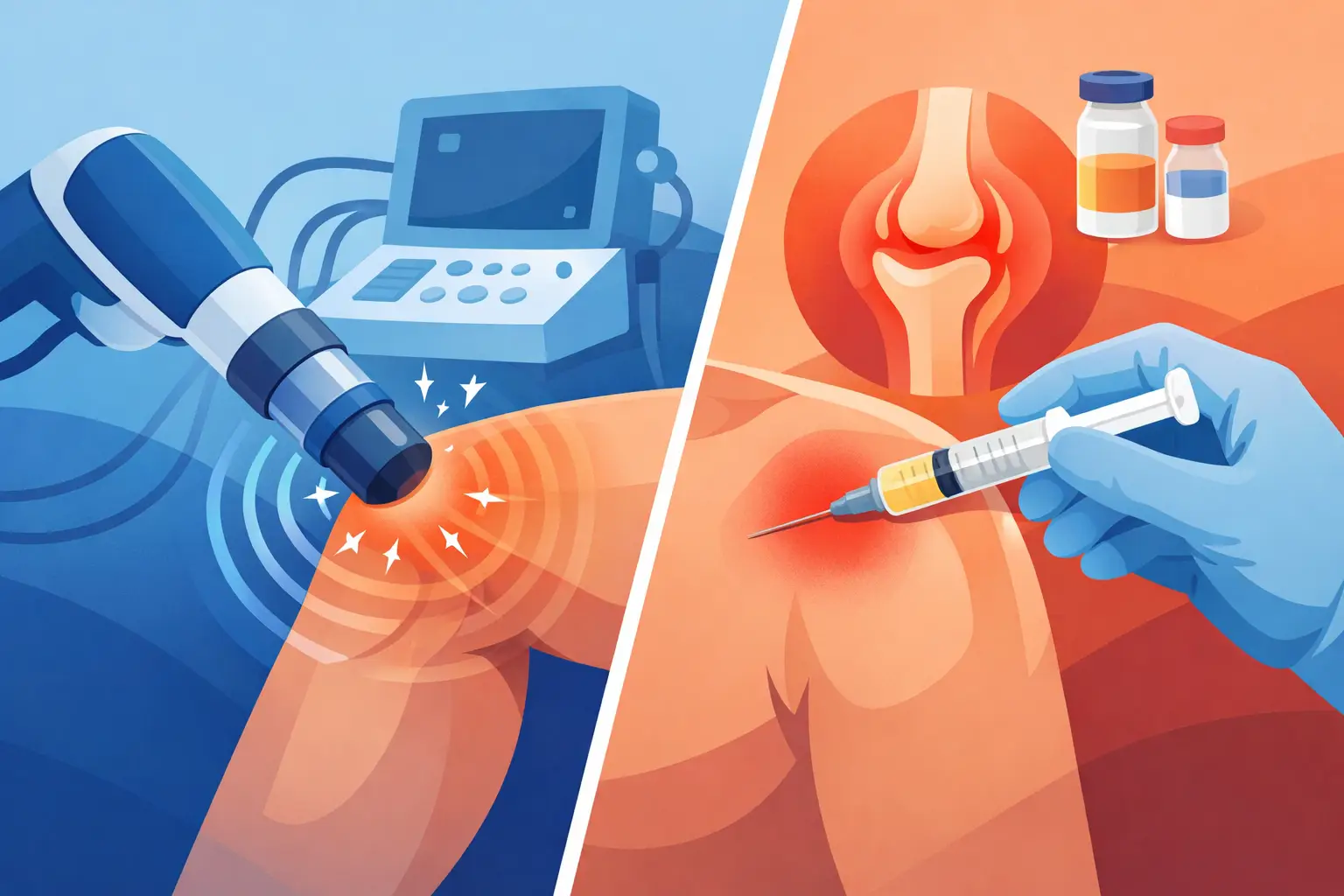
Shockwave Therapy Versus Cortisone Injections
Getting out of bed should not mean bracing for that first sharp step under your heel. When pain has lingered despite supportive shoes, activity changes and a home exercise plan, the question of shockwave therapy versus cortisone injections often comes up. Both treatments can have a place in managing stubborn foot and lower-limb pain, but they work in very different ways.
The right choice depends on the structure involved, how long symptoms have been present, your activity demands and your medical history. A podiatry assessment helps identify whether the pain is coming from the plantar fascia, a tendon, a joint or another source before deciding on treatment.
Why the diagnosis comes first
Heel pain is often called plantar fasciitis, but not every sore heel has the same cause. Pain at the bottom of the heel, for example, may involve the plantar fascia, a heel fat-pad problem, nerve irritation or referred pain from higher in the leg. Pain behind the heel may relate to the Achilles tendon or its attachment to the heel bone.
This matters because a treatment that is helpful for one condition may be less suitable for another. Cortisone is sometimes used to settle significant inflammation in a particular area. Shockwave therapy is generally considered for chronic tendon or plantar fascia pain that has not improved with first-line care. Neither should be treated as a quick substitute for an accurate diagnosis and a plan to address the reason the tissue became overloaded.
A consultation will usually consider your footwear, work demands, sport, walking pattern, calf flexibility, strength, previous injuries and relevant health conditions. Imaging may be recommended in some cases, particularly where there is concern about a tear, stress injury or another cause of pain.
How cortisone injections work
A cortisone injection uses a corticosteroid medication to reduce inflammation and calm pain in a targeted area. It is commonly administered by a suitably qualified medical practitioner, often with ultrasound guidance depending on the site and clinical circumstances.
For some patients, an injection can provide relatively fast pain relief. That can be valuable when symptoms are limiting sleep, work, walking or the ability to participate in rehabilitation. Reduced pain may also make it easier to begin prescribed stretching, strengthening and loading exercises.
However, cortisone does not repair a damaged tendon or plantar fascia. Its effect can be temporary, and pain can return if the underlying loading issue is not addressed. Injections are usually considered carefully rather than used repeatedly, particularly around tendons and the plantar fascia.
Potential drawbacks of cortisone
Cortisone injections can cause a short-term flare in discomfort after the procedure. Other possible risks vary by injection site and include skin or fat-pad changes, infection, raised blood glucose levels for people with diabetes, and weakening or rupture of nearby tissue. For plantar heel pain, repeated steroid injections may increase the risk of plantar fascia rupture.
This does not mean cortisone is always inappropriate. It means the expected benefit needs to outweigh the risk for the individual patient. Your treating clinician should explain the reason it is being considered, alternatives available and the aftercare required.
How shockwave therapy works
Shockwave therapy, also called extracorporeal shockwave therapy, delivers controlled acoustic pressure waves to the painful area. In podiatry, it is commonly used for persistent plantar heel pain and certain tendon conditions, including Achilles tendinopathy.
The aim is not to numb the pain. The treatment is intended to stimulate a healing response in stubborn, overloaded tissue and may help improve pain over time. It is non-invasive, performed in the clinic and does not involve an injection or surgical incision.
A course usually involves several appointments spaced over a number of weeks. The treatment can feel uncomfortable while it is being delivered, particularly in a sensitive area, but sessions are brief. Most people can walk out of the clinic afterwards and continue usual daily activities, although high-impact exercise may need to be adjusted according to their treatment plan.
What results can you expect?
Shockwave therapy is not generally an instant fix. Some people notice an improvement during their course of treatment, while others see a more gradual change over the following weeks. Results are usually strongest when shockwave is combined with a broader plan that may include calf and foot strengthening, load management, footwear advice, taping or orthotic support where appropriate.
It may not suit everyone. Shockwave is commonly avoided or deferred in situations such as pregnancy, certain bleeding disorders, use of particular blood-thinning medicines, active infection, or where there is a concern about a fracture or tumour. Your clinician will screen for relevant factors before treatment.
Shockwave therapy versus cortisone injections: key differences
The clearest difference is the treatment goal. Cortisone aims to reduce inflammation and can offer quicker short-term relief in selected cases. Shockwave aims to encourage a longer-term tissue response in chronic conditions, with improvement typically building gradually.
Cortisone involves a needle and medication, while shockwave is non-invasive. An injection may be an option when pain is severe and inflammation is thought to be a major driver. Shockwave may be more appropriate where tendon or plantar fascia symptoms have persisted for months and conservative care has not been enough.
The risk profile is different too. Cortisone has tissue-related risks that require careful consideration, especially near the Achilles tendon and plantar fascia. Shockwave can cause temporary soreness, redness or bruising, but does not carry the same injection-related risks. On the other hand, it often requires a series of sessions and patience with a progressive rehabilitation plan.
Cost, availability and rebate eligibility can also differ. It is reasonable to ask about the total expected cost of a course of care, likely number of appointments and what other treatments will be part of the plan.
What treatment is best for plantar heel pain?
For plantar heel pain, the first approach is often practical and conservative. This may include reducing aggravating activity for a period, choosing more supportive footwear, avoiding prolonged barefoot walking on hard floors, improving calf and foot strength, and using temporary supports where indicated.
If pain remains persistent, shockwave therapy may be considered as part of a structured plan. Cortisone may be considered in specific circumstances, but clinicians are usually cautious because of the potential effect on the plantar fascia and heel fat pad. The decision should be based on the nature of your symptoms, examination findings and how you have responded to earlier treatment.
Pain that is worsening, associated with marked swelling, numbness, night pain, fever or an inability to bear weight needs timely medical assessment. These signs may point to something other than routine plantar heel pain.
What about Achilles tendon pain?
Achilles tendon pain requires particular care. Continuing to run, jump or play sport through significant tendon pain can make recovery harder, but complete rest is not usually the answer either. A carefully progressed strengthening program is commonly central to treatment.
Cortisone injections directly into or near the Achilles tendon are generally approached with great caution due to the risk of tendon weakening and rupture. Shockwave may be considered for chronic Achilles tendinopathy in suitable patients, alongside an individualised loading program. The location of the tendon pain, duration of symptoms and tendon changes on assessment all influence the plan.
Making a practical decision
Ask three useful questions at your appointment: What structure is causing my pain? What is this treatment expected to achieve? What else do I need to change so the pain is less likely to return?
At Ian’s Podiatry, treatment decisions are based on your examination, daily needs and goals, whether that means walking comfortably at work, keeping up with the kids or returning to training. Sometimes the best plan includes shockwave; sometimes an injection discussion with your GP or specialist is more appropriate; and sometimes a targeted exercise and footwear plan is the missing piece.
The most useful treatment is the one that matches your diagnosis and gives your foot or lower limb the best chance to cope with life again, not simply the one that promises relief fastest.