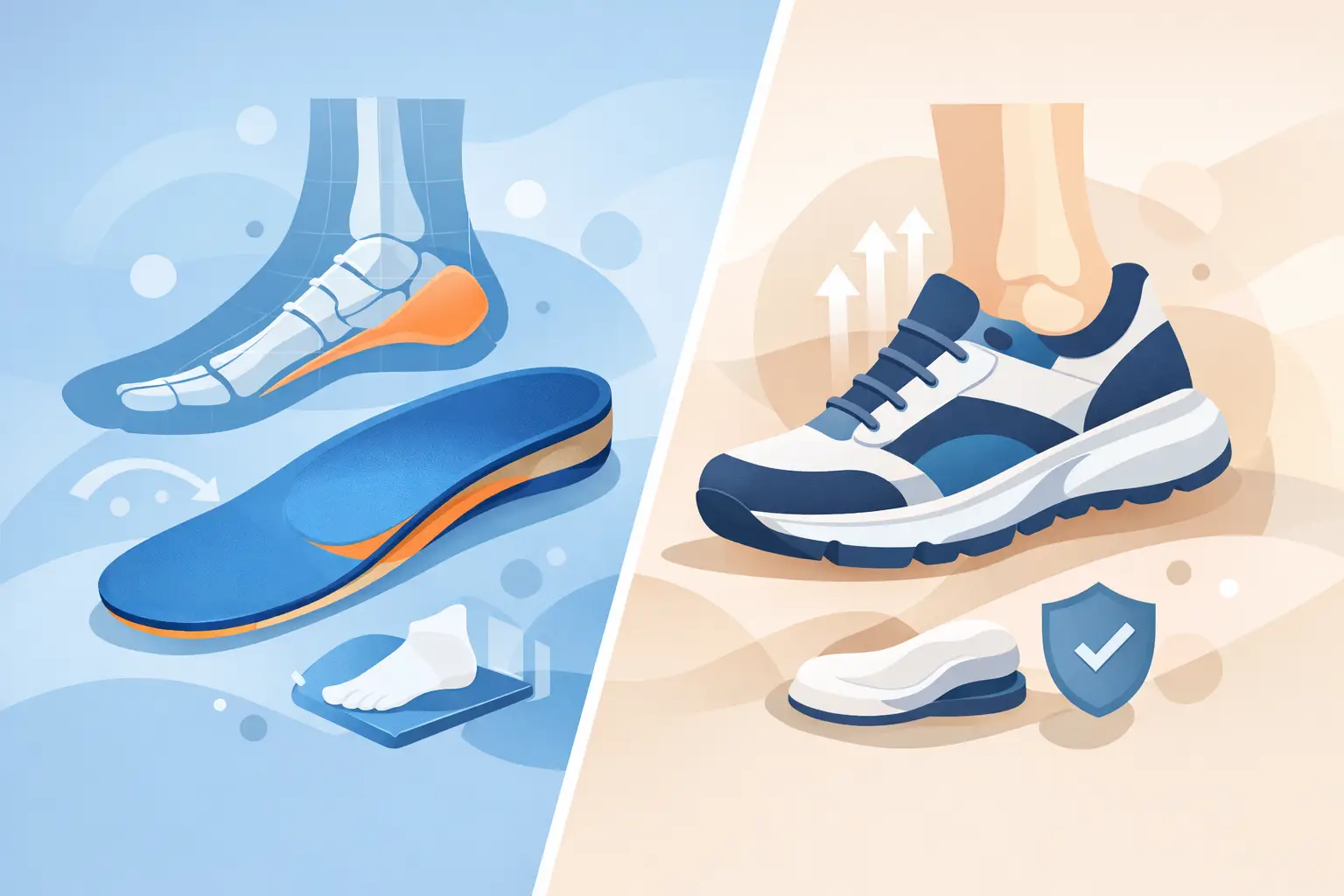
Orthotics vs Supportive Footwear
A lot of people only start comparing orthotics vs supportive footwear when the pain has stopped being occasional. It might be heel pain first thing in the morning, aching arches after work, sore knees after walking, or tired feet that never quite recover. At that point, the real question is not which option sounds better. It is which one actually matches the way your feet move, the demands of your day, and the cause of your symptoms.
Orthotics vs supportive footwear: what is the difference?
Supportive footwear and orthotics can work together, but they are not the same thing.
Supportive footwear is the shoe itself. It is built with features that help control movement and improve comfort, such as a firm heel counter, stable sole, appropriate cushioning, and enough structure through the midfoot. A good supportive shoe creates a better base for walking, standing, and exercising. For some people, that change alone makes a noticeable difference.
Orthotics are inserts placed inside the shoe to alter how the foot functions. Some are prefabricated and some are custom made. Their job is not simply to add softness. They are used to guide pressure, improve alignment, support a particular area of the foot, or reduce strain on tissues that are overloaded.
That is why orthotics vs supportive footwear is not always an either-or decision. A supportive shoe can improve the environment around the foot, while an orthotic can provide more specific control inside that shoe.
When supportive footwear may be enough
If your pain is mild, recent, or clearly linked to poor shoe choice, upgrading your footwear may be the most practical first step. This is common in people who spend long hours standing, wear very flat shoes, regularly use worn runners, or switch between shoes with very different levels of support.
A well-fitted supportive shoe can help reduce stress on the heel, arch and forefoot. It can also improve stability higher up the chain, which may ease symptoms in the ankles, knees and lower legs. For school-aged children, active adults and older people alike, the right footwear often improves comfort without needing a more complex intervention.
That said, supportive footwear has limits. Shoes come in standard shapes and support levels. If your foot mechanics are more pronounced, if one foot behaves differently from the other, or if you have a condition that needs targeted pressure relief, a shoe alone may not do enough.
When orthotics may be the better option
Orthotics are usually worth considering when the issue is not just lack of cushioning or general support, but the way your foot is loading and moving.
This can apply to ongoing plantar heel pain, recurrent arch strain, tendon overload, forefoot pressure, shin discomfort, or symptoms linked to flat feet or higher arches. Orthotics may also be useful when one part of the foot is taking too much force, when there is a significant difference between left and right, or when a person has a medical reason to reduce pressure in specific areas.
For patients with diabetes, this matters even more. Pressure points and friction are not just uncomfortable. They can become a risk. In those cases, footwear and orthotic decisions should be made carefully, based on foot shape, skin condition, circulation, sensation and activity level.
Custom orthotics are not necessary for everyone, and they are not a magic fix. They work best when prescribed for a clear reason, fitted properly, and reviewed over time.
Why the right choice depends on the cause of pain
Two people can both say, “My feet hurt,” and need very different solutions.
One person might have pain because their shoes are too soft and unsupportive for long shifts on hard floors. Another might be wearing decent shoes, but still overloading the plantar fascia because of the way their foot rolls in during walking. Someone else may have forefoot pain related to pressure under a particular joint, where an orthotic modification is more useful than simply changing shoes.
This is where assessment matters. Looking only at the painful area can miss the bigger picture. Foot posture, ankle movement, calf tightness, walking pattern, work demands, sport, age and previous injuries all influence what will help.
In a clinical setting, the aim is not to hand out the same answer to everyone. It is to work out whether the problem is mostly about footwear, biomechanics, load, tissue irritation, or a mix of all four.
Orthotics vs supportive footwear for common problems
Plantar heel pain is one of the most common reasons people seek help. In early or mild cases, supportive footwear can reduce stress on the heel and make day-to-day walking more manageable. If symptoms persist, an orthotic may help by changing how force moves through the foot and reducing strain on irritated structures.
With flat feet, the decision depends on symptoms rather than appearance alone. Plenty of people have flatter feet and no pain. If there is fatigue, arch pain, ankle instability or reduced tolerance for activity, supportive shoes may help. Orthotics may be added if more control is needed.
For sports-related pain, the answer often depends on the demands of the activity. Running, court sports and field sports create repeated load and directional change. A stable sports shoe may solve the issue for some athletes, while others need orthotic support to manage recurring symptoms and maintain training.
In children, treatment is more selective. Not every child with a flat foot posture needs orthotics. If a child is active, pain-free and developing well, monitoring may be enough. If there is pain, tripping, fatigue, or obvious difficulty keeping up with activity, footwear advice and podiatry assessment can help guide the next step.
What supportive shoes should actually have
A shoe described as “supportive” is not always clinically supportive. Marketing terms can be vague, and a very cushioned shoe is not automatically the best choice.
In general, a supportive everyday shoe should have a firm heel counter, a sole that bends at the forefoot rather than through the middle, secure fastening, enough room for the toes, and a shape that suits your foot. The shoe should feel stable, not sloppy. If it twists easily in your hands or your heel lifts excessively while walking, it may not be doing much to control movement.
Comfort still matters. A shoe that looks supportive but pinches, rubs or changes the way you walk is not the right shoe for you.
Where people get stuck
One of the most common problems is trying to solve a mechanical issue with softness alone. People often buy thicker insoles or heavily cushioned shoes hoping the pain will disappear. Sometimes that helps, but sometimes it simply masks the problem while the irritated tissue keeps getting loaded.
Another issue is putting orthotics into shoes that are too flexible, too shallow, or too worn out to support them properly. Even a well-made orthotic works best when paired with suitable footwear.
There is also the assumption that custom always means better. In reality, the best option is the one that addresses your problem, fits your shoes, suits your daily routine and improves comfort consistently. For some patients, that is supportive footwear and advice. For others, it is a more tailored orthotic approach.
Getting the decision right
If your symptoms are mild and your current shoes are clearly not up to the job, start there. Replacing worn or unsupportive footwear can be a sensible first move. If pain keeps returning, if one area stays tender despite rest, or if you are dealing with diabetes, sport-related overload, or ongoing mobility issues, a proper assessment is the smarter next step.
At Ian’s Podiatry, this kind of decision is based on how your feet function in real life, not just on what feels good in the shop for five minutes. The goal is to reduce pain, improve movement and give you a plan that makes sense for work, sport, school or everyday walking.
The best support is not the most expensive option or the one with the biggest claims on the box. It is the one that helps you move with less pain and more confidence, day after day.