Best Treatments for Ingrown Toenails
That sharp, tender pain at the edge of your toenail can go from mildly annoying to hard to ignore in a matter of days. When people search for the best treatments for ingrown toenails, they usually want one thing – relief that actually lasts, not another short-term fix that ends with the same nail growing back into the skin.
An ingrown toenail happens when the side of the nail presses into, or grows into, the surrounding skin. The big toe is the usual culprit, although other toes can be affected too. Early on, it may look like minor redness or swelling. If it progresses, the area can become increasingly painful, warm, inflamed and sometimes infected.
What causes ingrown toenails?
There is rarely just one cause. In many cases, it is a combination of nail shape, pressure and trimming habits. Cutting the nail too short or rounding off the corners can encourage the nail edge to dig into the skin as it regrows. Tight shoes, repeated pressure from sport, sweaty feet, thickened nails, injury and naturally curved nails can all play a part.
Some people are also more prone to problems because of their foot structure or nail shape. Others may notice ingrown nails return again and again despite trying to manage them at home. If you have diabetes, poor circulation or reduced feeling in your feet, even a small ingrown toenail needs more careful attention because the risk of complications is higher.
Best treatments for ingrown toenails at home
If the problem is mild and there are no signs of infection, home care may settle it in the early stages. The key is to reduce pressure, calm inflammation and avoid making the nail edge more aggressive.
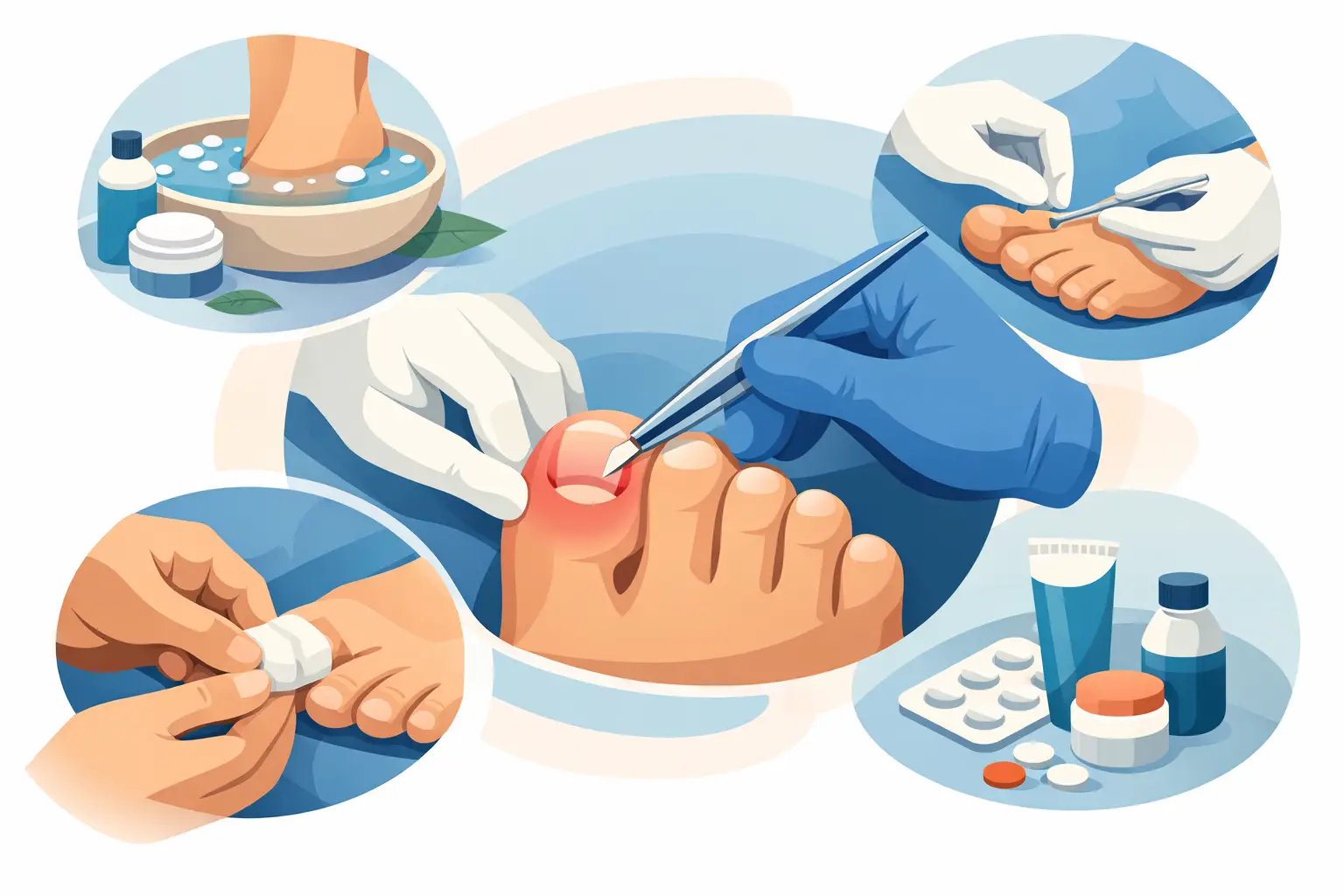
Soaking the foot in warm salt water for a short period can help soften the skin and ease tenderness. After drying the foot well, keep the area clean and avoid squeezing the toe into narrow shoes. Open-toe footwear or shoes with a wider toe box often make a noticeable difference while the area settles.
It is also worth looking at how the nail is being cut. Toenails should usually be trimmed straight across rather than curved down at the corners. Digging into the sides with nail scissors or trying to cut out the painful section yourself often makes things worse. It can leave a sharp spike behind, which continues to irritate the skin even if it feels better for a day or two.
If the skin is only slightly irritated, these simple measures may be enough. But home treatment has limits. If pain is increasing, the toe is becoming redder, there is discharge, or the problem keeps returning, it is time for a proper assessment.
When home care is not enough
There is a point where an ingrown nail moves beyond a routine nuisance. If walking is painful, the toe is throbbing, the area is swollen, or the skin has started to overgrow the nail edge, conservative care may no longer be enough.
Infection is one reason people seek treatment, but it is not the only one. Persistent inflammation without obvious infection can still be very painful. Some patients put up with it for weeks because they assume it will sort itself out. Often, it does not. Instead, the nail keeps catching the same sore area and restarting the cycle.
Children, teenagers and active adults often develop recurring ingrown toenails because of sport, rapid growth, sweating and shoe pressure. Older adults may have thicker nails or find it harder to manage nail care safely at home. The best treatment depends on how severe the nail is, whether infection is present, and whether this is the first episode or one of many.
Podiatry treatment for ingrown toenails
A podiatrist will assess the toe, the nail shape, the surrounding skin and any factors that may be driving the problem. This matters because two ingrown toenails can look similar but need different management.
For a relatively early or moderate case, conservative treatment may involve carefully removing the offending nail edge, reducing thickened nail, cleaning the area and relieving pressure. This approach can give prompt pain relief and is often enough when the problem has not become deeply embedded or chronic.
Just as important is addressing why it happened. That may mean changing footwear, adjusting nail trimming technique or managing moisture and friction around the toes. If those drivers are not dealt with, the same nail can become ingrown again.
Where infection is present, the treatment plan may need to account for the level of inflammation, any discharge and the patient’s general health. It depends on the severity. Some cases improve quickly once the nail spicule is removed and pressure is taken off the skin. Others need closer medical management, especially if there are underlying health concerns.
The role of nail surgery
For people with recurrent or severe cases, nail surgery is often one of the best treatments for ingrown toenails because it addresses the source of the problem rather than only the flare-up.
This procedure usually involves removing the narrow section of nail that keeps growing into the skin. In many cases, the nail matrix in that section is treated so that troublesome edge does not regrow. The goal is not to remove the whole nail unless that is genuinely necessary. More commonly, it is a partial nail procedure designed to leave the rest of the nail intact while preventing repeat episodes.
The idea of nail surgery can sound worse than the reality. Patients are often relieved to find that the procedure is straightforward, performed under local anaesthetic and followed by clear aftercare instructions. There can be a short recovery period, and the toe needs to be kept clean and monitored while it heals, but many people find the trade-off worth it after repeated pain and infection.
It is not the automatic first step for everyone. A first-time mild ingrown nail may respond well to conservative care. But if the same toe flares up every few months, surgery can be the more practical long-term option.
Which treatment is right for you?
There is no single answer that suits every patient. The best approach depends on a few key factors – how painful the toe is, whether infection is present, how long it has been happening, and whether there are any health conditions that change healing or risk.
For a mild case, careful home care and early podiatry treatment may be enough. For a moderate case with persistent pain, professional treatment to remove the ingrown section is often the quickest path to relief. For chronic or recurring cases, partial nail surgery is often the most reliable option.
This is especially true if you have already tried home remedies without success. Repeatedly trimming the nail yourself, using cotton under the corner or waiting for it to settle can drag the problem out. Sometimes that delays proper treatment and leads to more inflammation than you started with.
Extra care for higher-risk patients
If you have diabetes, poor circulation, nerve changes, or a history of slow healing, an ingrown toenail should not be treated as a small problem. Even minor skin damage around the nail can become more serious if healing is reduced or sensation is impaired.
In these situations, avoid bathroom surgery at home. Do not cut into the corners, tear the nail, or try to dig out the edge with sharp tools. Early podiatry care is the safer option because it reduces the risk of infection and protects the surrounding skin.
This is also relevant for older patients and anyone who struggles to reach or see their feet clearly. Good intentions do not always equal safe nail care.
How to help prevent ingrown toenails
Prevention is not always perfect, especially if your nails are naturally curved, but it does reduce the odds of another painful episode. Trim nails straight across, avoid cutting them too short, and choose footwear that does not crowd the toes. If sport or work boots place regular pressure on the forefoot, it may be worth reviewing fit rather than assuming discomfort is normal.
Regular podiatry care can also help if your nails are thick, difficult to cut, repeatedly ingrown, or affected by other foot issues. For some patients, small changes in routine make all the difference. For others, recurring ingrown nails are a structural problem, and a more definitive treatment plan is the better path.
At Ian’s Podiatry, treatment is focused on relieving pain, settling the current problem and helping prevent the next one. If an ingrown toenail is stopping you from walking comfortably, wearing shoes properly or getting on with your day, early treatment usually means a simpler recovery.
A sore toe might seem easy to put off, but feet rarely reward delay. The sooner an ingrown nail is treated properly, the easier it is to get you back to moving without wincing at every step.