How Shockwave Therapy Treats Heel Pain Safely
That sharp first step out of bed can make an ordinary morning feel much harder than it should. Heel pain often settles a little once you are moving, then returns after a long day on your feet, a walk, or sport. Understanding how shockwave therapy treats heel pain can help you decide whether it may be a useful part of your treatment plan.
Shockwave therapy is a non-invasive treatment commonly used for persistent heel pain, particularly when the pain has not improved enough with rest, footwear changes, stretching, or other conservative care. It is not a quick fix for every sore heel. Used at the right time and alongside a clear plan, however, it can help many people move more comfortably and return to the activities that matter to them.
Why heel pain can be slow to settle
The most common cause of pain under the heel is plantar fasciitis, often called plantar fasciopathy when it has been present for some time. The plantar fascia is a thick band of tissue running from the heel towards the toes. It supports the arch and helps manage load as you walk, run and stand.
Repeated strain can irritate the area where this tissue attaches to the heel. A sudden increase in walking, standing shifts, running, changes in body weight, worn-out shoes, tight calves, or foot mechanics can all contribute. In Townsville, thongs, hard floors and an active outdoor lifestyle can also make it easy to keep loading a painful heel without realising how much recovery time it needs.
Not all heel pain is plantar fasciopathy. Pain at the back of the heel may involve the Achilles tendon or its attachment, while nerve irritation, stress injury, arthritis and other conditions can cause similar symptoms. A podiatry assessment matters because the right treatment depends on the actual source of pain.
How shockwave therapy treats heel pain
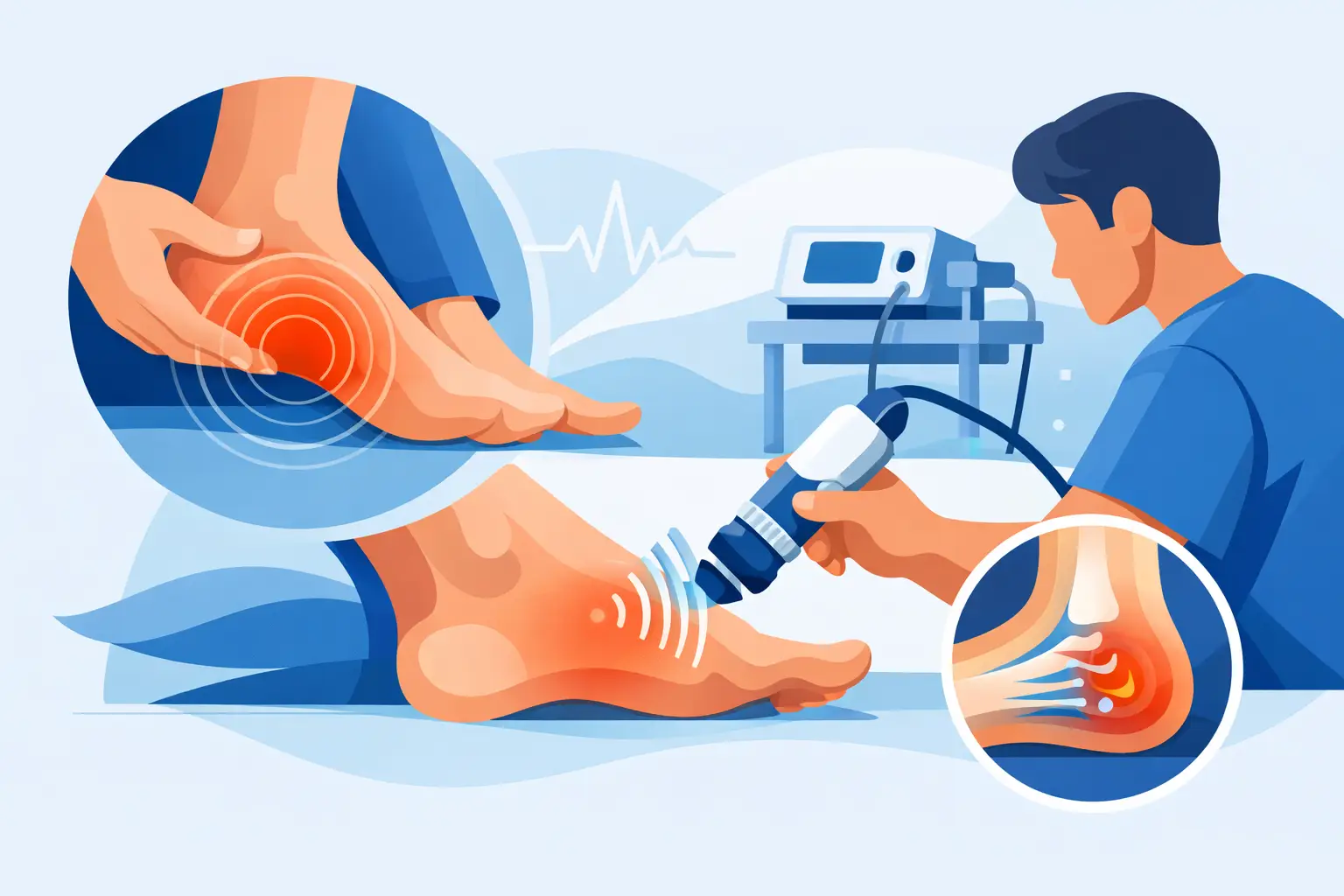
Shockwave therapy delivers controlled acoustic pressure waves through the skin to the painful area. Despite the name, it is not an electric shock and it does not involve surgery or injections. A podiatrist uses a handheld device and ultrasound gel to direct the treatment to the relevant tissue.
The pressure waves create a targeted mechanical stimulus in the area. This is thought to encourage the body’s healing response, improve local blood flow and help remodel tissue that has become persistently irritated or less able to tolerate load. It can also reduce pain sensitivity over time, making it easier to begin or progress the strengthening and mobility work that supports lasting improvement.
For chronic plantar heel pain, the goal is not simply to numb symptoms for a day. It is to help the tissue become more resilient while addressing the factors that overloaded it in the first place. That may include calf and foot strengthening, stretching where appropriate, footwear advice, activity changes, taping, or orthotics.
What the treatment feels like
A session is usually brief. You may feel a tapping or pulsing sensation over the heel, which can be uncomfortable at higher settings but should remain manageable. Your podiatrist can adjust the intensity according to your tolerance and the condition being treated.
It is common to have mild soreness or sensitivity afterwards, similar to the feeling after a firm massage or a new exercise session. This usually settles within a day or two. Some people notice improvement early, while for others the change is gradual over several weeks as the tissue responds and load tolerance improves.
Who may benefit from shockwave therapy?
Shockwave therapy is often considered for people with heel pain that has lasted for several months or keeps returning despite sensible first-line treatment. It may suit someone whose work involves long periods of standing, an active person struggling to get back to running or walking, or a parent who cannot comfortably keep up with daily family routines.
The best candidates are not defined by pain duration alone. Your podiatrist will consider where the pain is located, how it behaves, your activity demands, medical history, footwear and foot function. A person with clear plantar fascia pain who can follow a gradual exercise plan may benefit differently from someone whose heel pain is actually related to a stress fracture or nerve issue.
Shockwave therapy is generally not appropriate for everyone. Pregnancy, certain bleeding disorders or blood-thinning medication, reduced sensation, active infection, a suspected fracture, and some medical conditions may affect whether it is suitable. The assessment is the place to discuss these factors openly.
What happens during a heel pain appointment
A thorough appointment starts with listening to your story. When did the pain begin? Is it worst with the first steps in the morning, after sitting, during activity, or at the end of the day? Your podiatrist will also ask about changes in work, exercise, footwear and previous injuries.
The physical assessment may include checking the painful area, calf flexibility, ankle and foot movement, strength, walking pattern and the way your shoes are wearing. If the symptoms do not fit a straightforward plantar fascia problem, imaging or referral may be recommended before treatment begins.
If shockwave therapy is appropriate, it is usually delivered as a course of sessions rather than a one-off treatment. The exact number and spacing vary with the condition, your response and the device used. Your podiatrist will explain what is recommended, what you can reasonably expect, and how to manage activity between appointments.
Why shockwave works best as part of a plan
A painful heel can tempt you to stop all activity, then do too much as soon as it feels better. Neither extreme usually helps. Relative rest means reducing the activities that clearly aggravate pain while keeping up safe movement and gradually rebuilding capacity.
Strength work is particularly valuable because the foot and calf need to handle load every time you walk. Depending on your assessment, your plan may include calf raises, foot-strengthening exercises, targeted mobility work, and a gradual return to walking or sport. The right level matters. Exercises that are too easy may not build capacity, while exercises that are too demanding can keep the area irritated.
Footwear can also make a meaningful difference. Shoes with a supportive heel counter, adequate cushioning and a stable sole are often more comfortable during recovery than flat, unsupportive or badly worn shoes. This does not mean one shoe suits everyone. The best option depends on your foot, work, sport and comfort.
Orthotics may be considered when foot mechanics or pressure patterns are contributing to the problem. They are not mandatory for every person with heel pain, and they work best when prescribed for a specific reason rather than as a stand-alone answer.
What results should you expect?
Improvement is rarely perfectly linear. You may have a better week, then notice a flare after a busy shift, a weekend of gardening or a return to training that was too ambitious. This does not automatically mean treatment has failed. It may simply mean the heel needs a slower progression in load.
Many people find that first-step pain, walking tolerance and day-to-day comfort improve over the treatment period, but results vary. Long-standing pain can take time to settle, especially if work or caring responsibilities make it difficult to reduce aggravating activities. Being consistent with the plan between sessions gives treatment the best chance of helping.
Seek assessment promptly if heel pain is severe, follows an injury, causes significant swelling or bruising, is painful at rest or at night, or is accompanied by numbness, fever or a wound. People living with diabetes should also have new foot pain checked early, particularly if there are changes to skin, sensation or circulation.
Practical care for a painful heel
While treatment is underway, avoid repeatedly testing the heel with long walks, runs or high-impact activity just to see whether it has settled. Choose supportive footwear at home as well as outside, and build activity in small, manageable increases. If you have been given exercises, make them part of your routine rather than saving them for the day the pain flares.
Persistent heel pain does not have to dictate how far you can walk, how long you can work on your feet or whether you can enjoy exercise. A clear diagnosis and a treatment plan tailored to your goals can provide a practical path back to more comfortable movement. Ian’s Podiatry can assess the cause of your heel pain and discuss whether shockwave therapy is appropriate for you.