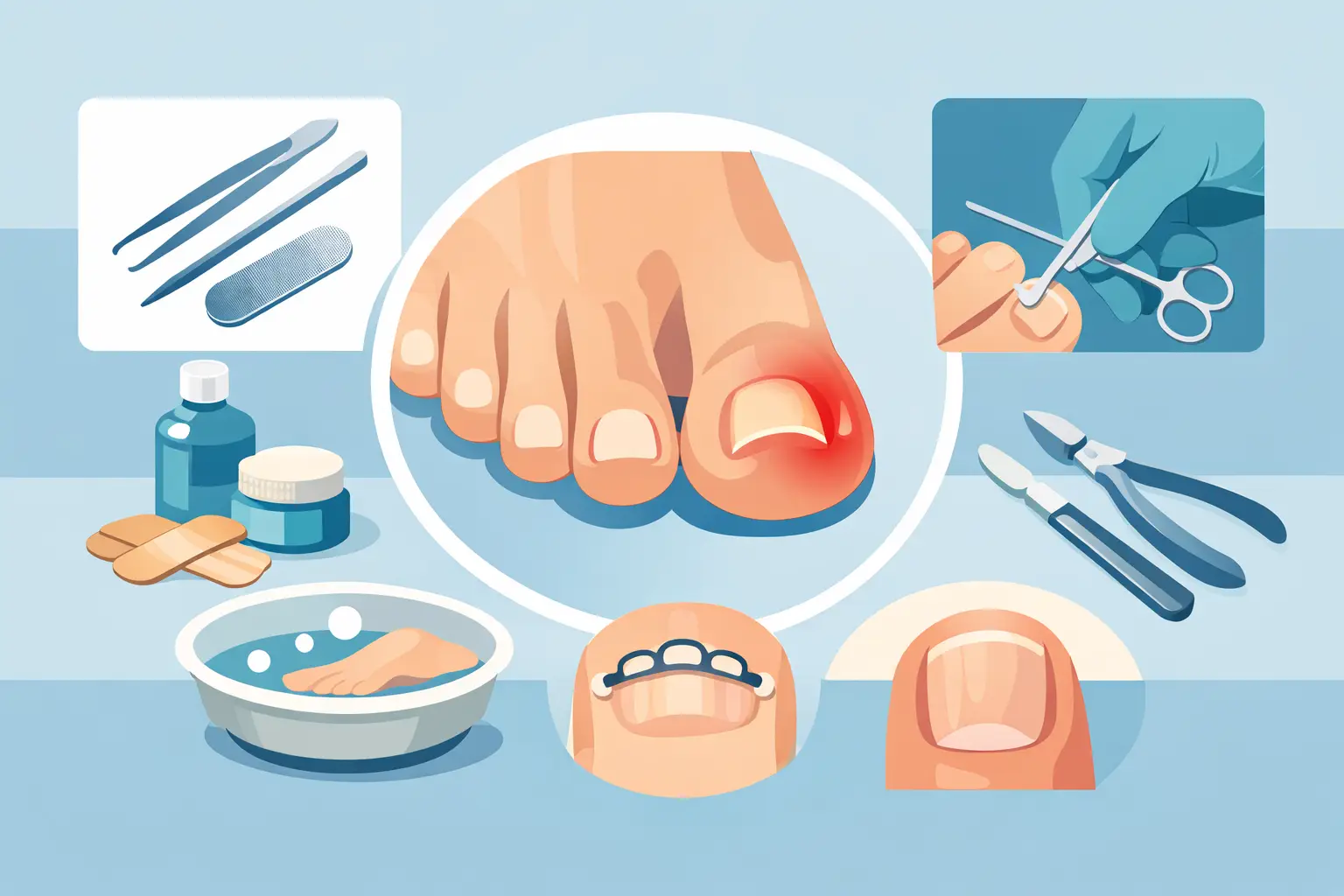
Ingrown Toenail Treatment Options Explained
That sharp, throbbing pain at the edge of your toenail usually starts small. A bit of redness, some tenderness in shoes, maybe a corner of the nail that keeps catching. Then walking gets uncomfortable, exercise becomes annoying, and suddenly you are searching for ingrown toenail treatment options that will actually settle the problem.
An ingrown toenail happens when the side of the nail presses into, or grows into, the surrounding skin. The big toe is the usual culprit, but it can happen on other toes too. In mild cases, the area may just be sore and swollen. In more advanced cases, it can become infected, drain fluid, or develop proud flesh around the nail edge. The right treatment depends on how severe it is, how long it has been there, and whether it keeps coming back.
Understanding ingrown toenail treatment options
Not every ingrown toenail needs the same approach. Some settle with early care and a change in footwear or nail trimming habits. Others need hands-on podiatry treatment to relieve pressure, clear infection risk, and stop the nail from continuing to dig in.
One of the most common reasons people struggle with this condition is trying to manage it too late. If the nail edge is deeply embedded, the skin is very inflamed, or there is ongoing discharge, home remedies are unlikely to fix the actual cause. They may reduce discomfort for a short time, but they do not always remove the nail spicule or change the way that nail grows.
Why ingrown toenails happen
There is usually more than one factor involved. Cutting nails too short or rounding off the corners is a common trigger. Tight shoes can increase pressure on the nail fold, especially if you spend long hours on your feet. Sweaty feet, trauma, sport, naturally curved nails, and poor foot mechanics can all play a part.
For some people, it is a once-off irritation. For others, it becomes a recurring problem because the nail shape itself keeps causing trouble. That distinction matters, because it changes which treatment is likely to give lasting relief.
When home care may help
If the toenail is only mildly irritated and there are no signs of infection, conservative care can sometimes settle it early. Soaking the foot in warm salty water may help reduce tenderness and keep the area clean. Wearing roomier shoes or open footwear can also take pressure off the toe while it calms down.
Some people get temporary relief by gently lifting the nail edge with a small piece of cotton or dental floss, but this should be done with care. If it is painful, difficult to place, or the area is already inflamed, it can make things worse. Digging at the corner of the nail with scissors, clippers, or tweezers is a very common reason a mild problem becomes a more painful one.
Good nail trimming also matters. Nails should generally be cut straight across rather than curved down at the sides. That said, once a nail is already ingrown, changing how you trim it will not immediately solve the current irritation. It is more useful as prevention than as a cure.
Signs home treatment is not enough
If there is increasing redness, swelling, warmth, bleeding, pus, or strong pain, it is time to stop experimenting. The same applies if the toe has been sore for more than a few days without improvement, or if the problem keeps returning in the same spot.
People with diabetes, poor circulation, nerve changes, or reduced healing capacity should be especially cautious. What looks minor can become more serious when healing is compromised. In those cases, early podiatry assessment is the safer option.
Podiatry care for an ingrown toenail
A podiatrist looks at more than the sore corner of the nail. They assess the level of inflammation, whether infection is present, what is causing the pressure, and whether the nail is likely to become ingrown again. That is important because effective treatment is not just about getting through this week. It is about reducing the chance of another painful flare-up.
Conservative podiatry treatment often involves carefully removing the offending nail edge or spicule. This can provide immediate relief because the part pressing into the skin is no longer there. The area may also be cleaned and dressed, and you may be given advice on footwear, nail care, and how to manage the toe over the following days.
This approach can work well for a first episode or a mild to moderate ingrown nail. The trade-off is that if the nail shape or growth pattern is the real issue, the same corner may still cause problems again later.
Managing infection and inflammation
If the toe is infected, treatment may involve clearing the nail edge, reducing local pressure, and monitoring how the tissue responds. In some cases, a GP may also be involved if oral antibiotics are needed, particularly where infection is spreading beyond the nail fold.
It is worth knowing that antibiotics alone do not fix an ingrown toenail if the nail is still physically embedded in the skin. They may help with bacterial infection, but they do not remove the source of irritation. That is why mechanical treatment of the nail often remains a key part of care.
Nail surgery as a long-term option
When conservative care has failed, the problem is severe, or the nail keeps growing back into the skin, partial nail surgery is often the most reliable option. This is a common podiatry procedure designed to treat the troublesome section of nail while preserving the rest.
A local anaesthetic is used to numb the toe. The offending side of the nail is removed, and in many cases a chemical is applied to the nail matrix to stop that narrow strip from regrowing. The result is a slightly slimmer nail that no longer digs into the skin at that edge.
For people who have been dealing with repeated flare-ups, this can be a very practical solution. It is not usually the first step for every ingrown nail, but it is often the treatment that gives the most lasting relief when recurrence is the pattern.
What recovery usually looks like
Recovery after nail surgery is generally straightforward, but it does require proper aftercare. The toe is dressed after the procedure, and you will usually need to keep it clean, dry when instructed, and re-dress it as advised. Some drainage is normal during healing, and most people can return to normal daily activity fairly quickly, although sport, swimming, and heavy physical work may need to wait for a short period.
Healing time varies from person to person. Your overall health, circulation, activity level, and how closely you follow aftercare instructions all make a difference. This is another reason self-surgery at home is a poor substitute. A controlled procedure in clinic is safer, cleaner, and far more likely to resolve the issue properly.
Which ingrown toenail treatment options are best for you?
The best ingrown toenail treatment options depend on the stage of the problem and your wider foot health. A mildly irritated nail with no infection may respond to early conservative care. A painful, swollen, or repeatedly infected nail often needs professional treatment. A chronic recurring ingrown nail may be best managed with partial nail surgery.
Age and health history matter too. Children and teenagers can develop ingrown nails from sport, growth changes, and shoe pressure. Adults who work on their feet may struggle because constant friction keeps aggravating the area. Older patients, especially those with circulation issues or diabetes, need timely treatment because the risks from infection are higher.
This is where local podiatry care can make a real difference. A clinic such as Ian’s Podiatry can assess whether simple nail care will do the job or whether a more definitive procedure is the better path. That kind of decision is best made early, before the toe becomes more painful and more difficult to manage.
Preventing the next ingrown toenail
Prevention is rarely complicated, but it does require consistency. Nails should be cut straight across and not too short. Shoes should allow enough room through the toe box, particularly for work, school, and sport. If your nails are naturally curved, thickened, or hard to manage, routine podiatry care can help keep them under control before they become painful.
It is also worth paying attention to patterns. If the same toe keeps flaring up after football, long shifts, or certain shoes, that is useful information. Preventing recurrence is often about identifying the pressure or trimming habit that is setting the problem off in the first place.
An ingrown toenail is easy to brush off at first, but waiting too long usually means more pain and fewer simple fixes. If your toe is becoming red, swollen, or difficult to walk on, getting it assessed early can save you a lot of discomfort and get you back to moving comfortably sooner.