Best Heel Pain Relief That Actually Helps
That first step out of bed can tell you a lot. If your heel stings, aches or feels sharply tender when you put weight on it, you are probably not looking for theory – you want the best heel pain relief that actually helps you walk comfortably again.
Heel pain is one of the most common reasons people book a podiatry appointment. It can affect runners, tradies, parents on their feet all day, school-aged kids and older adults who have noticed their mobility slipping. The tricky part is that heel pain is not one single condition. What works well for one person may do very little for another, especially if the real cause has not been identified properly.
What causes heel pain in the first place?
For many adults, the most common cause is plantar fasciitis. This is irritation of the thick band of tissue under the foot that connects the heel to the toes. It often causes pain under the heel, especially with the first few steps in the morning or after sitting for a while.
Heel pain can also come from Achilles tendon issues, heel spurs, bursitis, nerve irritation, fat pad syndrome or stress-related bone injuries. In children and teenagers, heel pain may be linked to growth-related conditions such as Sever’s disease, particularly if they are active in sport.
That is why chasing generic advice online can be frustrating. Ice, stretching or new shoes may help, but only if they match the problem. If they do not, treatment can drag on for months.
Best heel pain relief starts with the right diagnosis
The best heel pain relief usually begins with understanding where the pain is, when it happens and what is loading the area. Heel pain under the foot behaves differently from pain at the back of the heel. Pain that eases once you warm up can point to a different issue than pain that worsens the longer you walk.
A proper assessment looks at more than the sore spot. Foot posture, ankle movement, calf tightness, walking pattern, work demands, sport load and footwear all matter. Sometimes the heel is the place you feel the pain, but the reason it keeps returning is higher up the chain in the ankle, calf or lower limb mechanics.
This is also where people often lose time. They rest until it settles, return to normal activity too quickly, then end up back at the start.
What actually gives the best heel pain relief?
There is no single fix that suits every heel. The most reliable results usually come from combining short-term relief with treatment that reduces strain on the irritated tissue.
In the early stage, reducing aggravating load can make a real difference. That does not always mean complete rest. It may mean temporarily cutting back long walks, running, standing shifts or barefoot time around the house. For some people, a short period of modified activity helps calm things enough for treatment to start working.
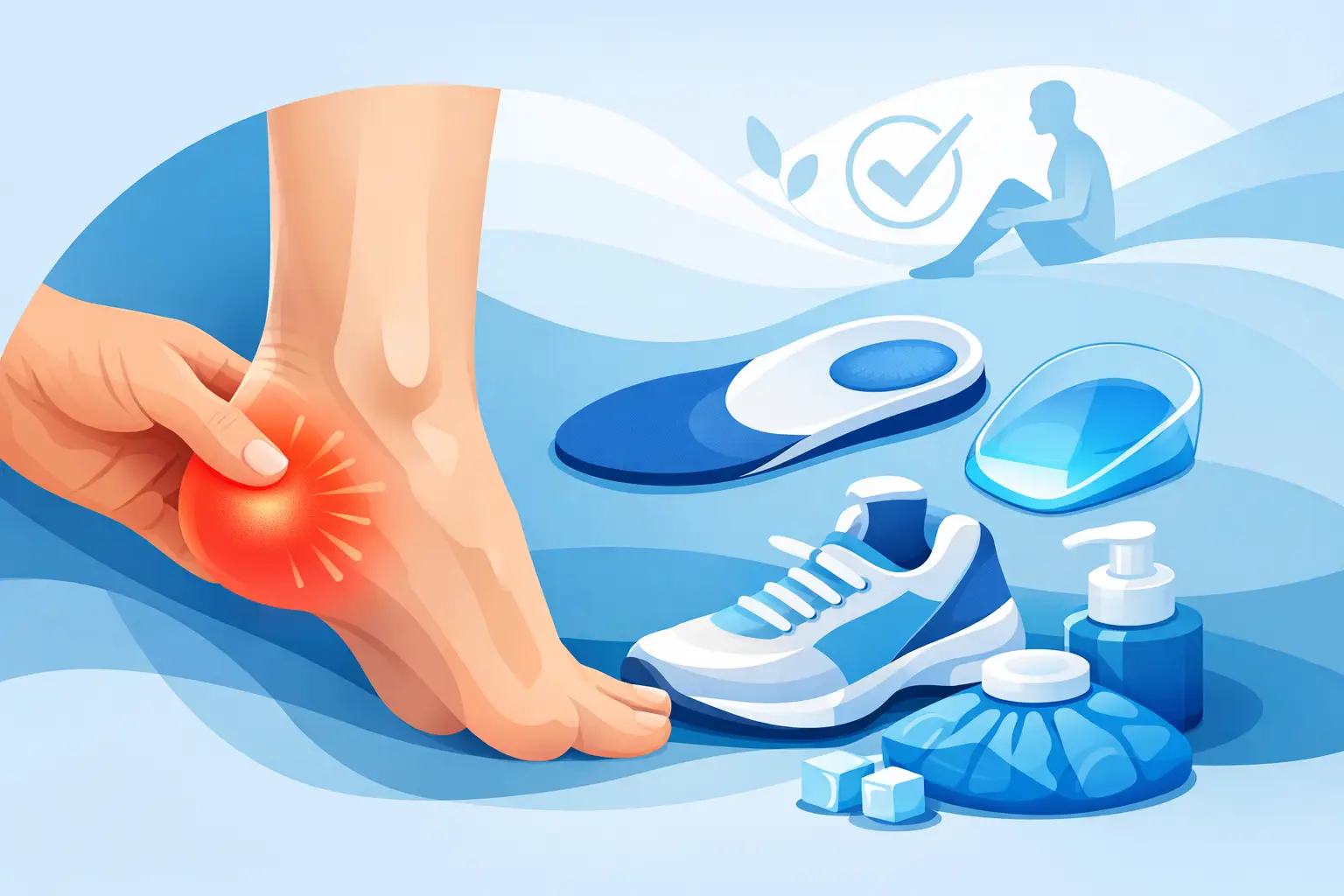
Supportive footwear is often one of the fastest ways to improve day-to-day comfort. Flat, unsupportive shoes or worn-out soles can keep the heel under stress. A more stable shoe with cushioning through the heel and arch can reduce that repeated strain. Around the house, many people do better in a supportive slide or sandal rather than going barefoot on tiles.
Targeted stretching can help, especially when calf tightness is contributing to the problem. But stretching is not a magic cure. Done well, it can improve movement and reduce tension through the plantar fascia or Achilles. Done too aggressively, it can irritate an already sore heel. The right exercise program depends on the diagnosis and the stage of irritation.
Taping can also provide short-term relief. For plantar heel pain, supportive taping may reduce strain under the foot and make walking easier while the tissue settles. It is helpful for some patients as a trial before moving to longer-term support options.
Orthotics can be valuable when foot mechanics are a major driver of pain. They are not necessary for every case, but they can be very effective when a person needs more consistent support than footwear alone can offer. The benefit tends to be best when orthotics are prescribed as part of a broader treatment plan, not as a stand-alone answer.
When hands-on treatment and advanced therapy help
If heel pain has been lingering for weeks or months, home care alone may not be enough. This is where treatment-led podiatry can make the difference between managing symptoms and properly improving them.
Hands-on care can help relieve tight structures, improve joint movement and reduce load through the painful area. That may include soft tissue work, mobilisation and guided rehabilitation. For some patients, dry needling is useful when calf tightness or lower-limb muscle tension is feeding into the problem.
Shockwave therapy is another option often used for persistent heel pain, particularly plantar fasciitis and some tendon conditions. It works by stimulating healing in tissue that has become slow to recover. It is non-invasive and can be a good fit for people who have had symptoms for some time and want to avoid more invasive measures. Like any treatment, it is not for everyone, but in the right case it can be a very effective part of care.
Why heel pain often keeps coming back
One reason heel pain becomes stubborn is that people treat the pain but not the cause of the repeated overload. If your job keeps you on hard floors all day, if your sport volume has jumped quickly, or if your footwear gives very little support, the heel may stay under pressure even while you are trying to recover.
Another common issue is returning to activity too fast. Pain may drop before the tissue is ready to handle full load again. This is especially common with runners and active adults who feel better after a week or two and go straight back to their usual training.
Weight-bearing patterns matter too. If your foot rolls in excessively, if your calf strength is poor, or if ankle movement is restricted, the heel may continue to absorb more stress than it should. Without addressing those factors, even a good short-term improvement may not last.
When to stop self-managing and book an assessment
Some heel pain improves with simple changes over a couple of weeks. But if it is lingering, worsening or changing the way you walk, it is worth getting checked properly.
You should seek assessment sooner if the pain is severe, if there is swelling or bruising, if you cannot put weight through the foot properly, or if the pain followed a sudden increase in exercise or a specific injury. People with diabetes should also be cautious with any ongoing foot pain and avoid waiting too long to have it assessed.
Children with heel pain should not be brushed off as just having “growing pains” either. Growth-related heel conditions are common, but they still need the right management to keep a child active and comfortable.
Best heel pain relief for different people
The best heel pain relief can look different depending on your daily demands. A runner may need load management, calf rehab and a graded return-to-run plan. A worker on concrete floors may need footwear changes, shock absorption and better support through long shifts. An older adult may need help with balance, mobility and reducing pain that is limiting walking confidence.
That is why a broad podiatry approach matters. Treatment should not just focus on the sore heel. It should also consider how you move, what you do each day and what you need to get back to.
At Ian’s Podiatry, that often means combining practical treatment with a clear plan – easing pain now, improving the way the foot is loading, and helping prevent the problem from settling in again.
What you can do today
If your heel is sore, start by avoiding barefoot walking on hard floors, swapping into supportive footwear and reducing the activities that flare it up most. Ice may help after activity if the area feels irritated, and gentle calf stretching can be useful if it does not increase pain.
What matters most, though, is not guessing for too long. Heel pain that hangs around rarely improves just because you push through it. The sooner the cause is identified, the easier it is to choose treatment that actually fits the problem.
A sore heel can shrink your world faster than people expect. When walking the dog, doing the school run or getting through a workday starts to hurt, proper care is not just about pain relief – it is about getting your movement and routine back with confidence.